DropKitchen · Product & feature bets
From a seller’s problem to a working product in one week.
Food sellers were deciding what to make, and how much, through intuition and scattered messages.
I turned those conversations into a usable pre-order product in seven days. Four sellers joined the pilot, and their feedback shaped what I built next.
Ready for Sunday.
Roasted vegetable bowls, made to order.
At a glance
- My role
- Founder. I owned research, product decisions, design, development and the releases that followed.
- The first release
- A storefront, pre-order drops, order tracking and a bank-transfer payment flow sellers could use with their customers.
Delivered the following Sunday, as promised.
Seller conversations guided the next product decisions.
The problem was knowing what to make
A friend who sold pastries at church had sold out while people still wanted to buy. I asked how she chose the menu and quantities for each Sunday. Her answer was mostly intuition: what she had made last time, and what she thought people might want.
Another seller making zobo, a hibiscus drink, was messaging people individually to gauge interest. The conversations pointed to the same need: a way to understand demand before committing time and ingredients.
A promise to deliver by the following Sunday
I asked whether a tool for collecting demand would help. When the answer was yes, I committed to bringing a usable pilot the next week.
I spent those seven days researching the market, defining the scope, designing and building the product. A seller could register by phone, create a storefront, add a menu with quantities and a deadline, share the drop, and track orders and payments. The first release covered a complete selling workflow.
From a pre-order to a prep list
Keeping the pilot moving when payments became a blocker
Payment-provider verification wasn’t ready for the launch deadline. Waiting would have delayed the pilot before a seller had tried it.
Letting four sellers shape the next release
Four sellers joined the pilot. A working product made the conversations more specific: what was missing, what was awkward, and what they needed to run the next drop.
One request was to take their numbers out of the platform. Sellers wanted to review previous drops and work with the figures elsewhere. I added exportable reports, with item totals, payment and collection status available as a PDF or spreadsheet.
Take the numbers out of the product
Removing another obstacle to creating a drop
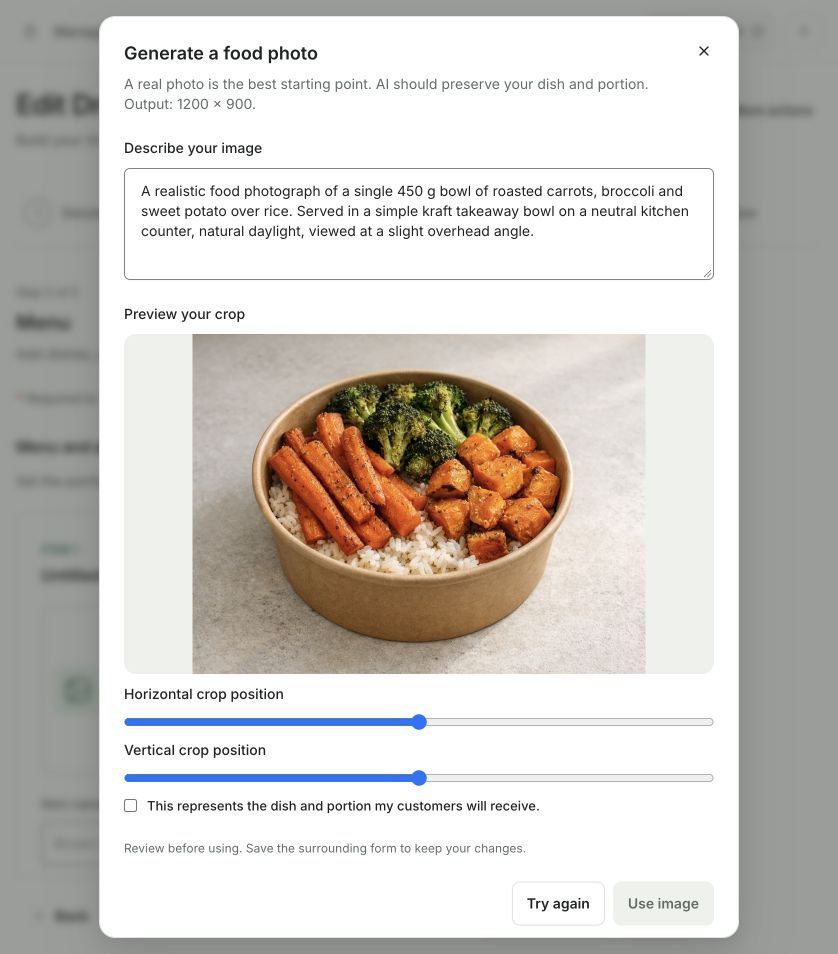
Images were another difficulty for sellers. I added AI food-photo creation inside the menu workflow, so a seller could describe a dish, review the result and adjust its crop before choosing whether to use it.
See food-photo creation in action
Create a food photo from a description
One person carrying the work through
I took responsibility for the full sequence: speaking to sellers, choosing the first problem, setting the scope, designing and building the pilot, working around the payment constraint, and turning feedback into further releases.
When you bring a product or feature bet to Clan Labs, that is how I work. I handle discovery, design, build and testing for the agreed scope, with one point of contact for context, access and decisions. Your team stays focused on its roadmap.
- A working pilot built around the customer problem and the assumptions we need to test.
- Evidence for the next decision: what people use, where they struggle, and what to continue, change or stop.
- The work in your hands: source code, design files, research findings and a practical handover.